
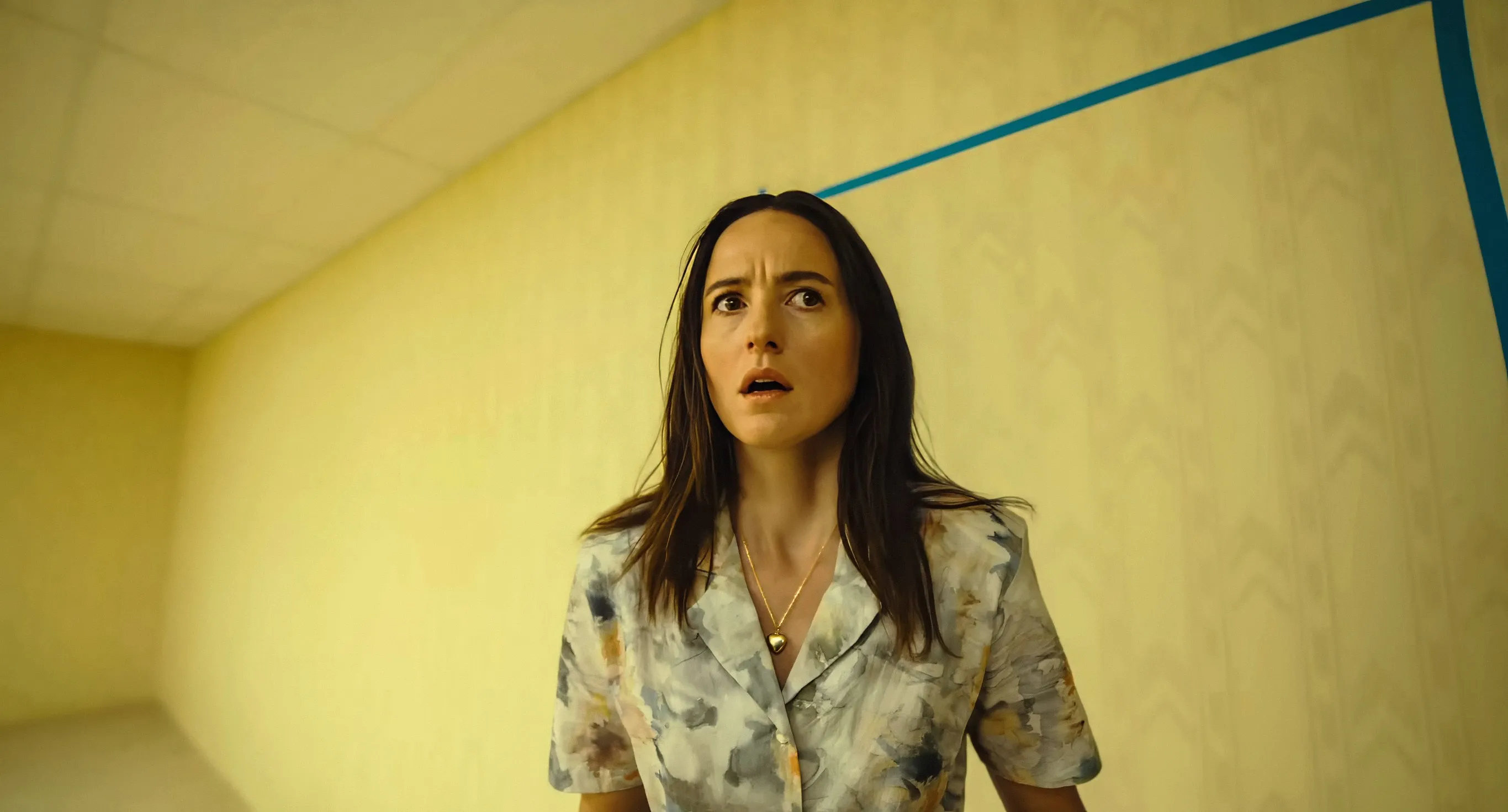
The uncanny nature of liminal spaces and specifically the idea of endless, extradimensional backrooms have been a part of filmmaker Kane Parsons’ life for seven years now — first, through his popular YouTube series and now as “Backrooms,” the A24 film directed by Parsons. When he first started talking with production designer Danny Vermette about realizing the creepypasta launchpad he’s become so steeped in as a feature film, Vermette asked him to blue sky — or perhaps, in this case, yellow wallpaper basement — what Parsons’s ideal scenario would look like.
The veteran production designer behind horror films like “Longlegs” and “The Monkey” was more than game to spend some time, as he told IndieWire, studying “at the University of the Backrooms,” and take on the challenge of creating uncanny spaces that would thrill hardcore fans of Parsons’ YouTube work and newcomers alike. So, how did Parsons want the backrooms to work? How much of them did he want to build?
The uncanny nature of liminal spaces and specifically the idea of endless, extradimensional backrooms have been a part of filmmaker Kane Parsons’ life for seven years now — first, through his popular YouTube series and now as “Backrooms,” the A24 film directed by Parsons. When he first started talking with production designer Danny Vermette about realizing the creepypasta launchpad he’s become so steeped in as a feature film, Vermette asked him to blue sky — or perhaps, in this case, yellow wallpaper basement — what Parsons’s ideal scenario would look like.
The veteran production designer behind horror films like “Longlegs” and “The Monkey” was more than game to spend some time, as he told IndieWire, studying “at the University of the Backrooms,” and take on the challenge of creating uncanny spaces that would thrill hardcore fans of Parsons’ YouTube work and newcomers alike. So, how did Parsons want the backrooms to work? How much of them did he want to build?
Related Stories
ADVERTISEMENT
A few weeks later, Vermette received a note from Parsons with a Blender file creating the world in digital space that Parsons would, ideally, like to build out in physical space. The file crashed Vermette’s computer. “It was like 100,000 square feet,” Vermette told IndieWire.
In the end, “Backrooms” had close to 30,000 square feet, across four stages, in order to create the backrooms spaces explored by beleaguered furniture salesman and frustrated architect Clark (Chiwetel Ejiofor) and his therapist Mary (Renate Reinsve), among others. But even within that, Vermette had to be incredibly strategic and flexible about how much space they could use, the demarcation lines between the real world and the backrooms, and how reality and liminal space would relate to each other.